Whole House Generator Installation in the Bay Area: What Homeowners Need to Know
Discover essential details about installing whole house generators in the Bay Area to combat outages. Get reliable backup for your home with expert insights.
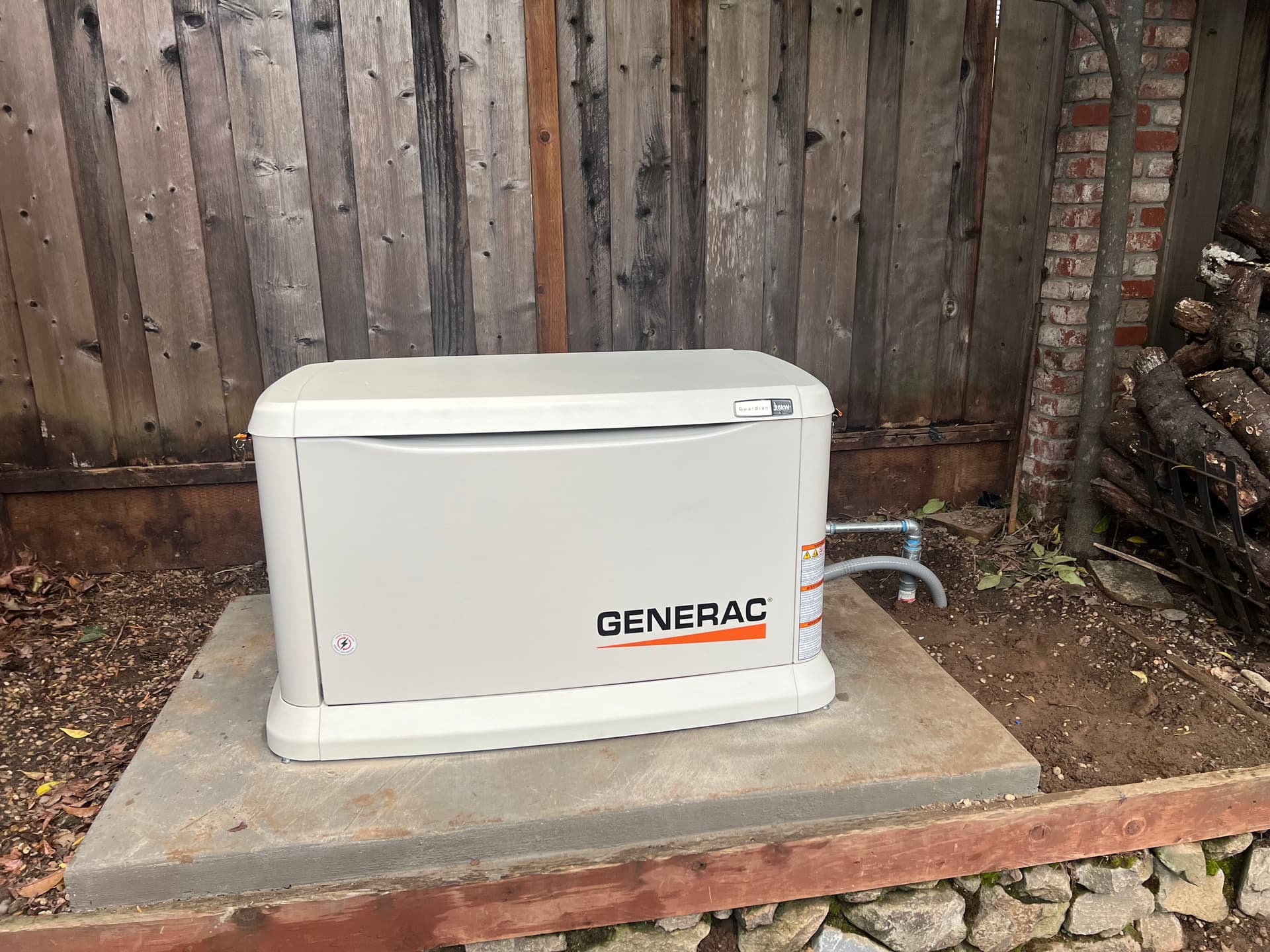
With PG&E outages and Public Safety Power Shutoffs (PSPS) still affecting parts of Northern California, many Bay Area homeowners are looking for reliable backup power solutions. While battery systems are popular, whole house standby generators remain one of the most dependable ways to keep your home running during extended outages.
At Drummond Electric, we install automatic standby generators throughout San Jose, Los Altos, Palo Alto, Mountain View, Cupertino, Sunnyvale, Santa Clara, Campbell, Saratoga, Los Gatos, Morgan Hill, and Gilroy.
If you’re considering a home generator, here’s what you should know before moving forward.
What Is a Whole House Standby Generator?
A whole house standby generator is a permanently installed backup power system that automatically turns on when utility power is lost.
Unlike portable generators, standby units:
Start automatically within seconds
Power selected or entire home circuits
Run on natural gas or propane
Integrate with an automatic transfer switch
Require no homeowner intervention
For many Silicon Valley homeowners, this provides peace of mind during wildfire season and unexpected outages.
Why Bay Area Homeowners Are Installing Generators
Protection During PG&E Outages
Power reliability remains a real concern across Santa Clara County and surrounding areas. While battery systems can help, extended outages can exceed battery capacity.
Standby generators can run for days or even weeks (with natural gas), making them especially attractive for:
Work-from-home households
Homes with medical equipment
Large all-electric homes
Properties in outage-prone areas
High-end homes needing full continuity
Whole-Home Coverage Capability
One major advantage of standby generators is the ability to support large loads.
Depending on sizing and load calculations, a generator can power:
HVAC systems
Refrigeration
Lighting circuits
EV charging (load-managed)
Pool equipment
Home offices and servers
Proper design is critical — oversizing wastes money, undersizing causes performance issues.
Seamless Automatic Operation
With an automatic transfer switch (ATS), the system works without homeowner action.
Typical sequence:
Utility power fails
Transfer switch signals generator
Generator starts (usually within 10–20 seconds)
Home circuits transfer to generator power
When utility returns, system switches back automatically
For busy homeowners, this “set it and forget it” operation is a major selling point.
Generator vs Battery Backup: Which Is Better?
This is one of the most common questions we get in the Bay Area.
Generators — best for:
Long-duration outages
Large homes with heavy loads
Natural gas availability
Lower upfront cost per kW
Whole-home runtime certainty
Battery systems — best for:
Short outages
Solar integration
Silent operation
No combustion equipment
Homes prioritizing clean energy
In many Silicon Valley homes, the best solution is a hybrid strategy, combining battery backup with generator support for extended outages.
Fuel Options in the Bay Area
Natural Gas (most common)
Pros
Continuous fuel supply
No refueling required
Ideal for urban/suburban homes
Cons
Requires adequate gas line sizing
Not available in all rural locations
Propane
Pros
Works where natural gas is unavailable
Clean-burning fuel
Cons
Requires on-site tank
Needs periodic refilling
Higher operating cost
Most of our Santa Clara County installs use natural gas when available.
Installation Considerations (Bay Area Specific)
Permit and Code Requirements
Generator installations in cities like San Jose, Palo Alto, and Los Altos typically require:
Electrical permit
Mechanical permit (sometimes)
Gas permit
Noise compliance review
Proper setbacks
Each AHJ has nuances — planning ahead prevents delays.
Gas Line Sizing
This is one of the most commonly overlooked items.
Many existing homes do not have sufficient gas capacity for a 22–26 kW generator without upgrades.
At Drummond Electric, we perform:
Load calculations
Gas sizing verification
Coordination with plumbers when needed
Transfer Switch Planning
The transfer switch configuration determines what the generator powers.
Options include:
Whole-home transfer
Partial home backup
Load-managed systems
Smart panel integration
Design should be based on the homeowner’s priorities and budget.
Typical Generator Installation Timeline
In the Bay Area, most projects follow this flow:
Site evaluation and load calculation
System design and proposal
Permit submission
Utility coordination (if required)
Installation
Inspection and commissioning
Typical timeline: 3–6 weeks depending on jurisdiction and equipment availability.
Is a Generator Worth It in the Bay Area?
For many homeowners — especially in outage-prone areas — the answer is yes.
A standby generator is particularly valuable if you:
Experience repeated PG&E outages
Work from home
Have refrigerated medications
Want whole-home backup certainty
Own a large or high-end property
Every home is different, which is why proper evaluation matters.
Generator Installation Service Areas
Drummond Electric provides standby generator installation throughout:
San Jose
Los Altos
Palo Alto
Mountain View
Cupertino
Sunnyvale
Santa Clara
Campbell
Saratoga
Los Gatos
Morgan Hill
Gilroy
Surrounding Bay Area communities
Get a Whole House Generator Quote
If you’re considering a standby generator in San Jose, Los Altos, or anywhere in Silicon Valley, Drummond Electric can evaluate your home and recommend the right system size and configuration.
We specialize in:
Whole house generator installations
Automatic transfer switches
Gas and electrical coordination
Smart load management
High-end residential electrical systems
Contact Drummond Electric today to schedule your generator consultation.